Elizabeth Speaks: A Conversation with Naima Mora
Naima Mora on Elizabeth Catlett, Memory, and the Film She Was Called to Make
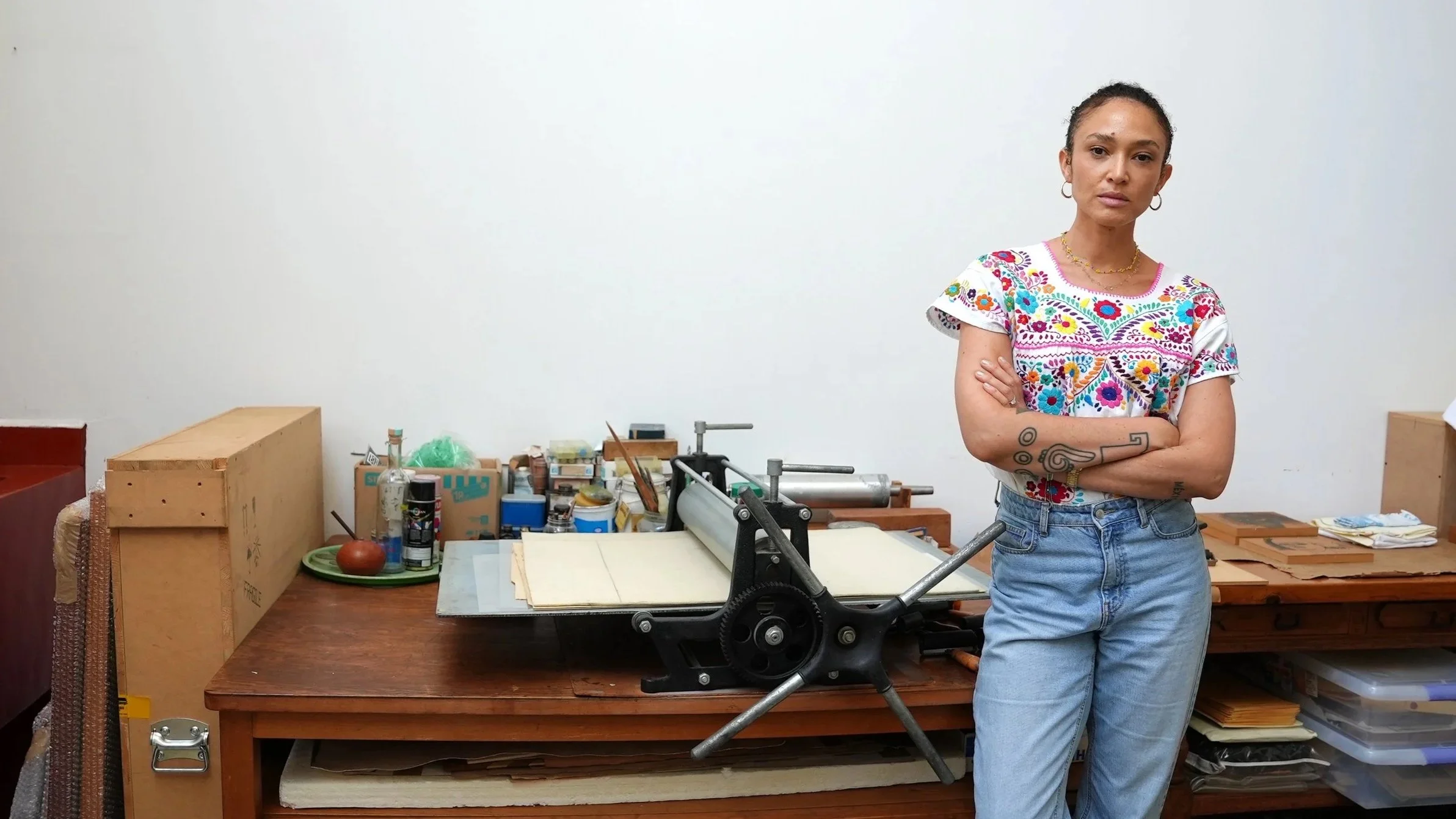
Image courtesy of Naima Mora Productions
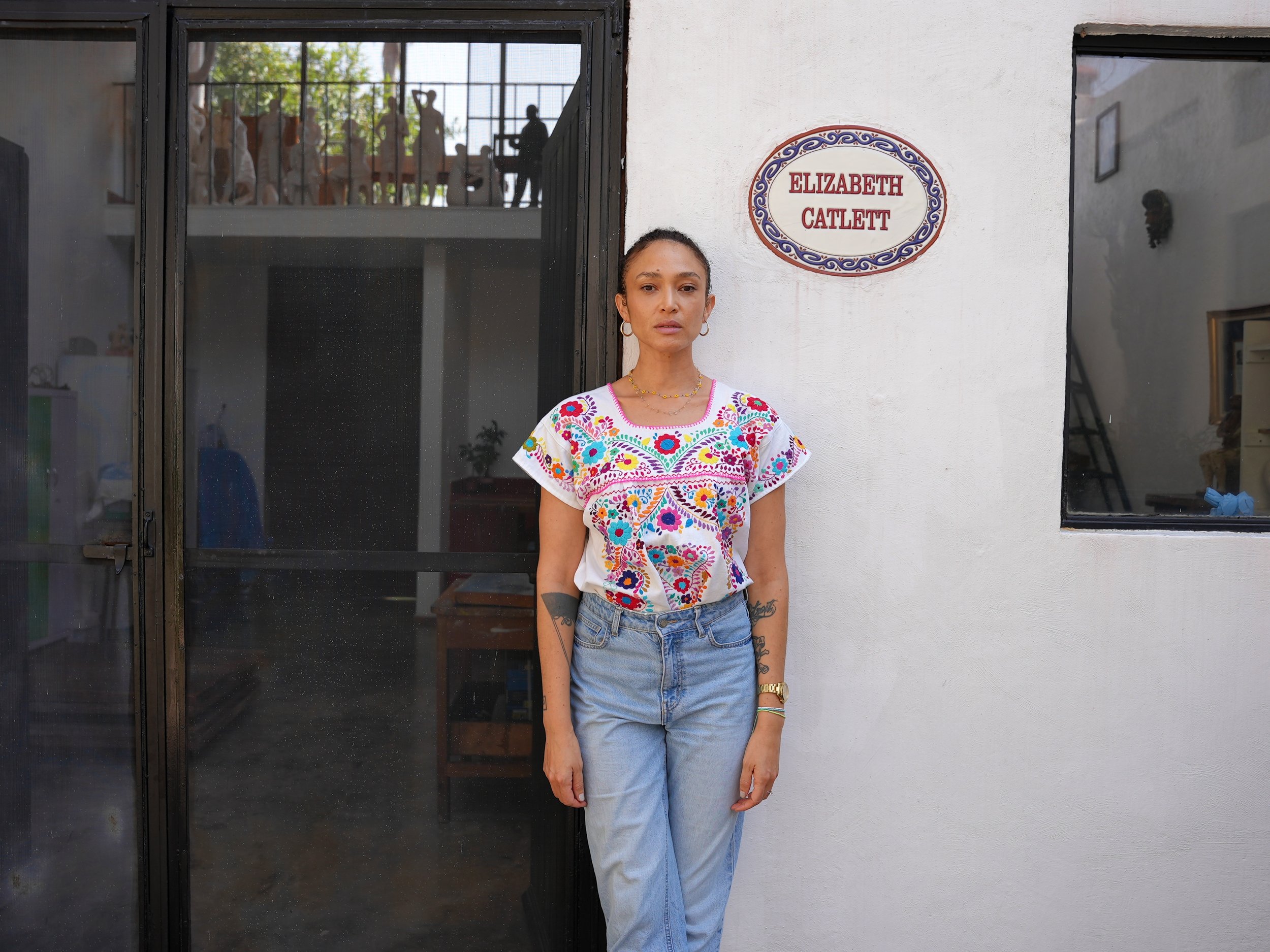
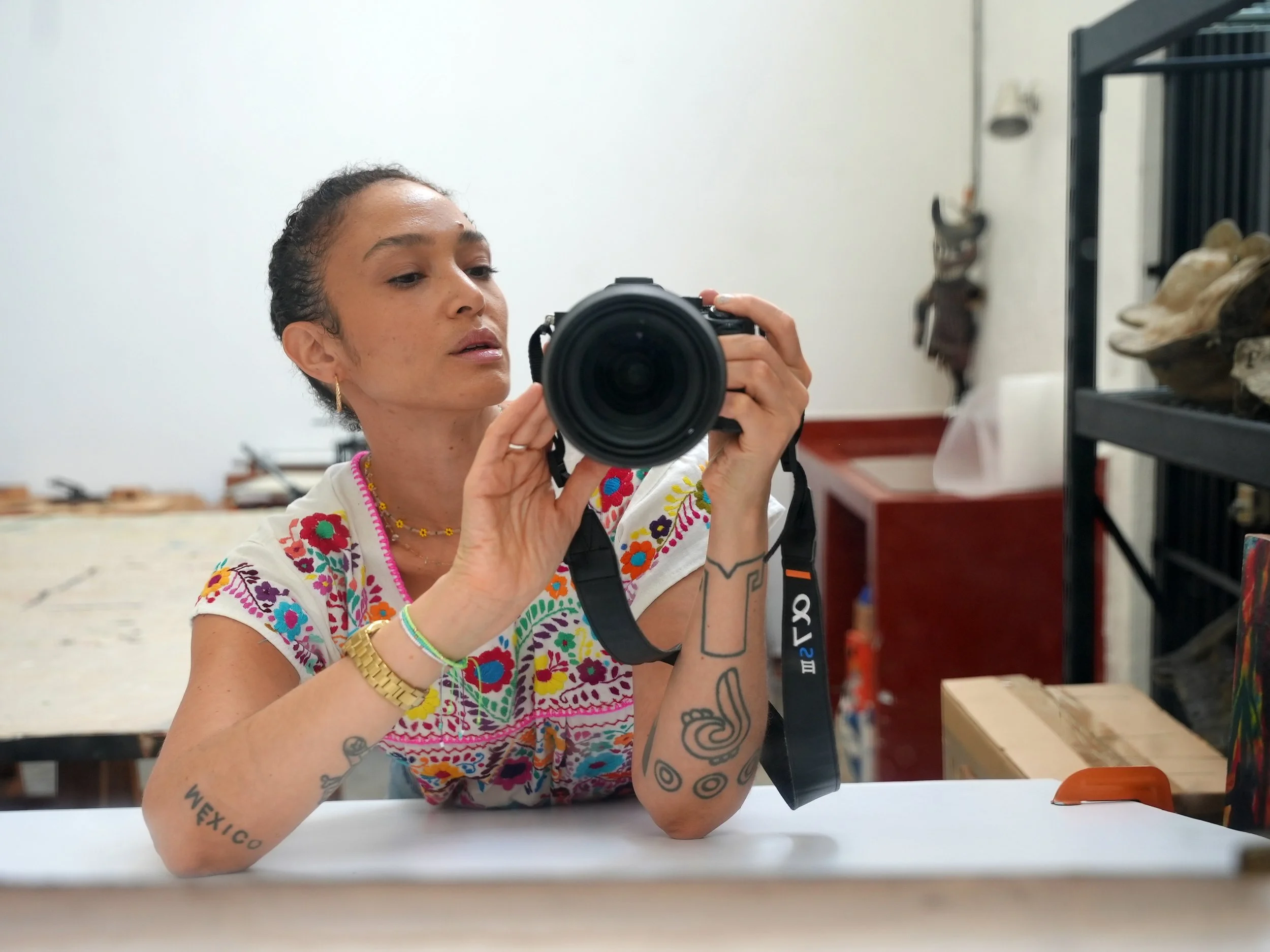
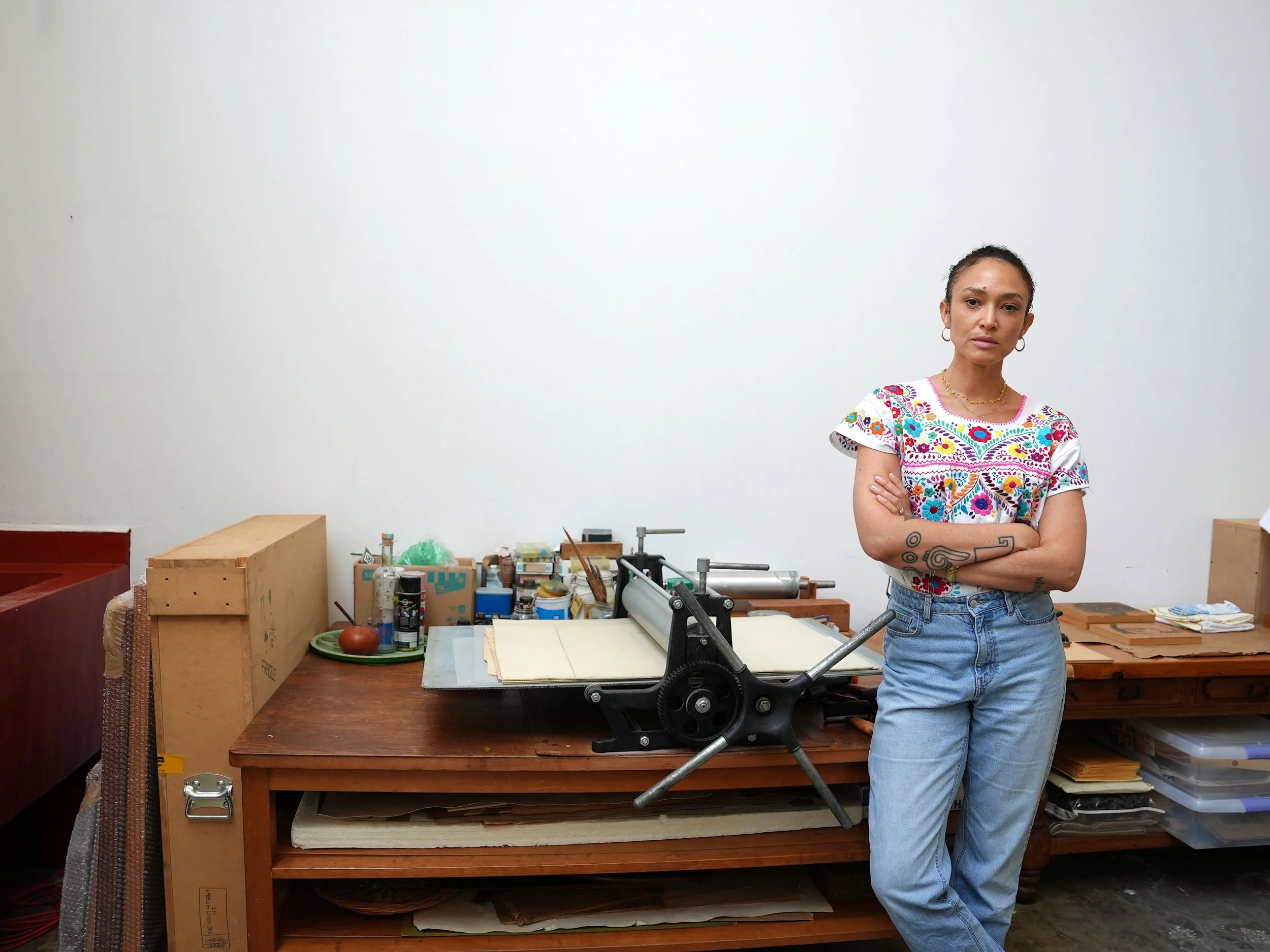
Several weeks ago, I hopped on a call with my dear friend Naima Mora, who had recently relocated to the beautiful home her grandparents built in Cuernavaca, Mexico — the former home of her grandmother, the legendary sculptor and printmaker Elizabeth Catlett, whose bold, dignified depictions of Black and Mexican life made her one of the most important artists of the 20th century. That home now doubles as the studio for Naima Mora Productions.
Her voice carried a tone of peaceful strength and a certainty that expressed her mission and the natural path it has taken since Naima first shared this personal dream of producing a documentary about the life and works of her revolutionary grandmother over a cup of coffee.
The mission remains the same, but the path has taken her on a road of deeper discovery of both herself and her grandmother, allowing her to connect the dots of Elizabeth's story directly from the source: Naima discovered the written works, an unpublished memoir, of the great Elizabeth Catlett.
Sasha
So where are we currently, Ms. Naima?
Naima
I am in Cuernavaca, Mexico, at the home my grandparents built. Working on my film. It's the family house, but it's also currently staging as my production studio.
Sasha
When you encountered your grandmother's final words and memoir, what did it feel like hearing her speak again? What was that moment like and how has it reshaped your storytelling from the original plans of the documentary?
Naima
When I found the memoir, I didn't necessarily find it, find it. I had to do a lot of deep investigating. When I got back from the Art Institute of Chicago, I had been documenting the traveling retrospective, trying to find exactly what it is that the story was about. Primarily I wanted it to focus on this transformation that I had undergone while experiencing her voice through her artwork in these institutions. But my producing partner was like, this feels more like the making of the film.
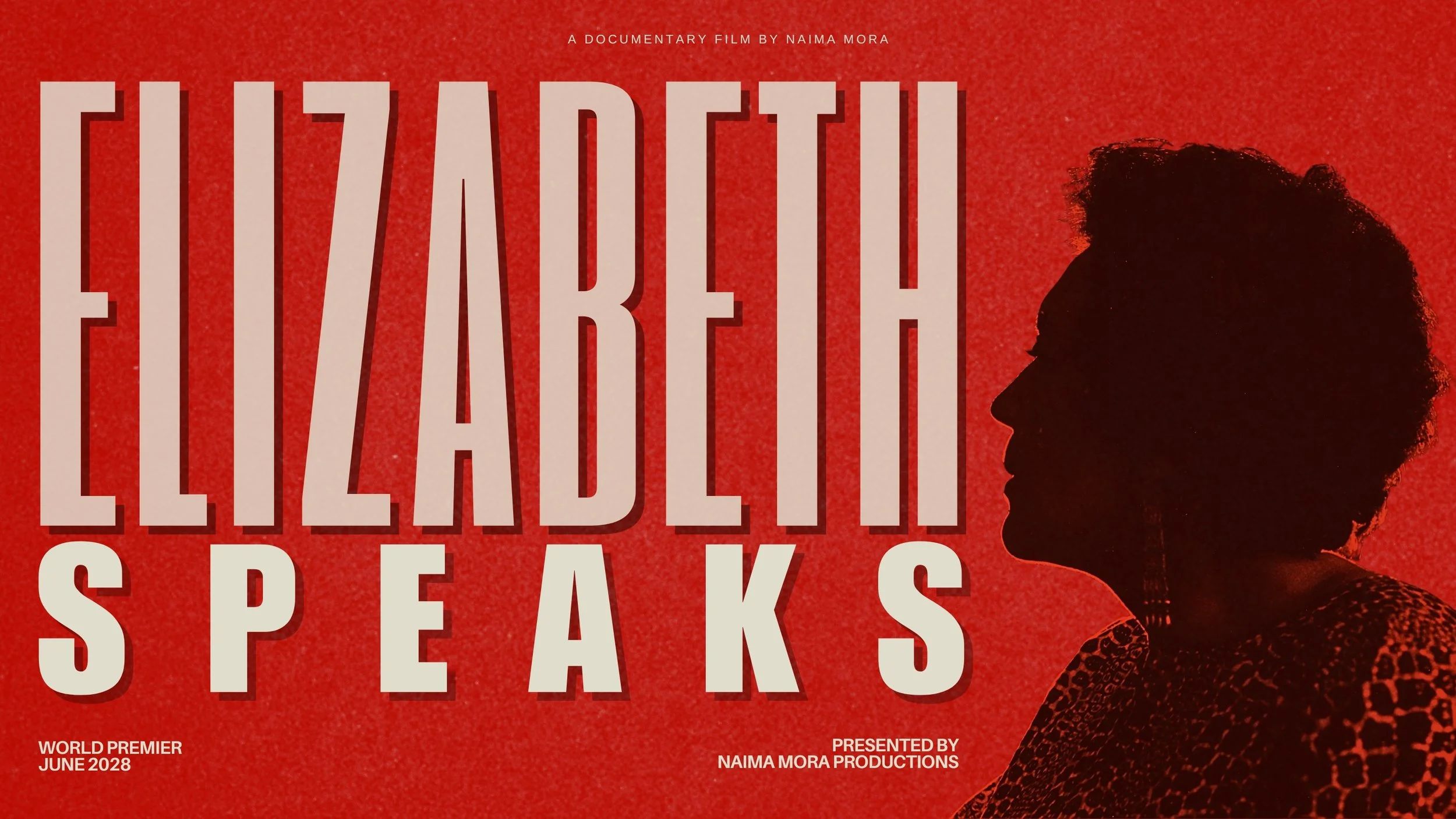
I felt reluctant about it because I had decided to call it Elizabeth Speaks — as she speaks to me, but it was a movie about Naima's transformation. So when I got back from Chicago, I was telling my uncle about it. He said, if you want something in her voice, I think she was writing something a couple of years before she passed away. And I was like, oh my gosh, show me, where is it? So we go into the studio — my uncle and I — and we're in there for like half an hour looking through old papers and he finds it. "Oh, here it is, this is it!" I had my cell phone ready — and it was in that moment that I knew that's what I was looking for.
I had intentionally waited a couple of weeks to read it, for when I felt emotionally prepared to do so. And it took me a couple of days, but the first chapter that I opened up, I was crying because I had never heard her speak so poetically. It was like meeting her for the first time as a woman — not necessarily as the artist. And I understood that in finding the memoir, it only reaffirmed what I already had an intuition about, which was to give a 360 perspective of her life where her artwork didn't necessarily shadow her as a human being.
So it helped in the pivot of the film. I read it out loud in my own voice, so I heard her speaking through myself. And that was the beginning of — it didn't come all at once, because I'm still exploring a lot of it in the editing process right now. But I knew that I had to bring her words to life and explore a way to do so where my voice upholds hers. And I think that's so symbolic as women of color, we do that naturally with each other. And that's where I found the juice.
Sasha
So speaking of the "juice” and creativity– your grandmother confronted systems that tried to contain her, and as you bring her story forward, what does it mean to inherit not just her memory but her defiance, and how does that show up in your own creative life?
Naima
I've become less patient with a lot of the atrocities that we are witnessing globally, internationally, and in the United States as people of color. It has positioned me as I adopt her politics more and more — it's kind of just like a natural osmosis that's happening, the closer I get to her in this research and the documenting. But it positions me to question my own values and be very honest with myself about it. Do I really care about certain materialistic things that were a driving force for me before? Coming from the world of fashion, I held a lot of my value for so long in what jobs I booked and what people I worked with — this proximity game — and that has become not important to me, pretty much at all. At this point it's more so about creating something tangible that people can hold on to. Which I'm realizing, honestly, is where I started my career. I just wanted to make something beautiful for people to see themselves in.
Sasha
Lets talk more about the 360 perspective. Where did the inspiration and the entire idea of having the component of an art piece that is pressed on your grandmother’s equipment come from? How did you chose the artist to collaborate with on this?
Naima
I had worked with Latoya Hobbs with the traveling retrospective, which I was kind of called into. The whole process of receiving Elizabeth's flowers, speaking on behalf of her [and the] behalf of my family, just feels kind of like a spiritual part of the process. My grandma calls to my spirit in a lot of different ways, and I felt like that was one of the ways for her to remind me of who I am. She was like Mufasa on the Lion King — "Remember who you are." And so at the ending of the retrospective, I had done these talks with the public programming teams, worked with Latoya — there's a portrait of me at the National Gallery of Art and the bust that she did. It was just so much of her saying, Naima, you got to step up for us.
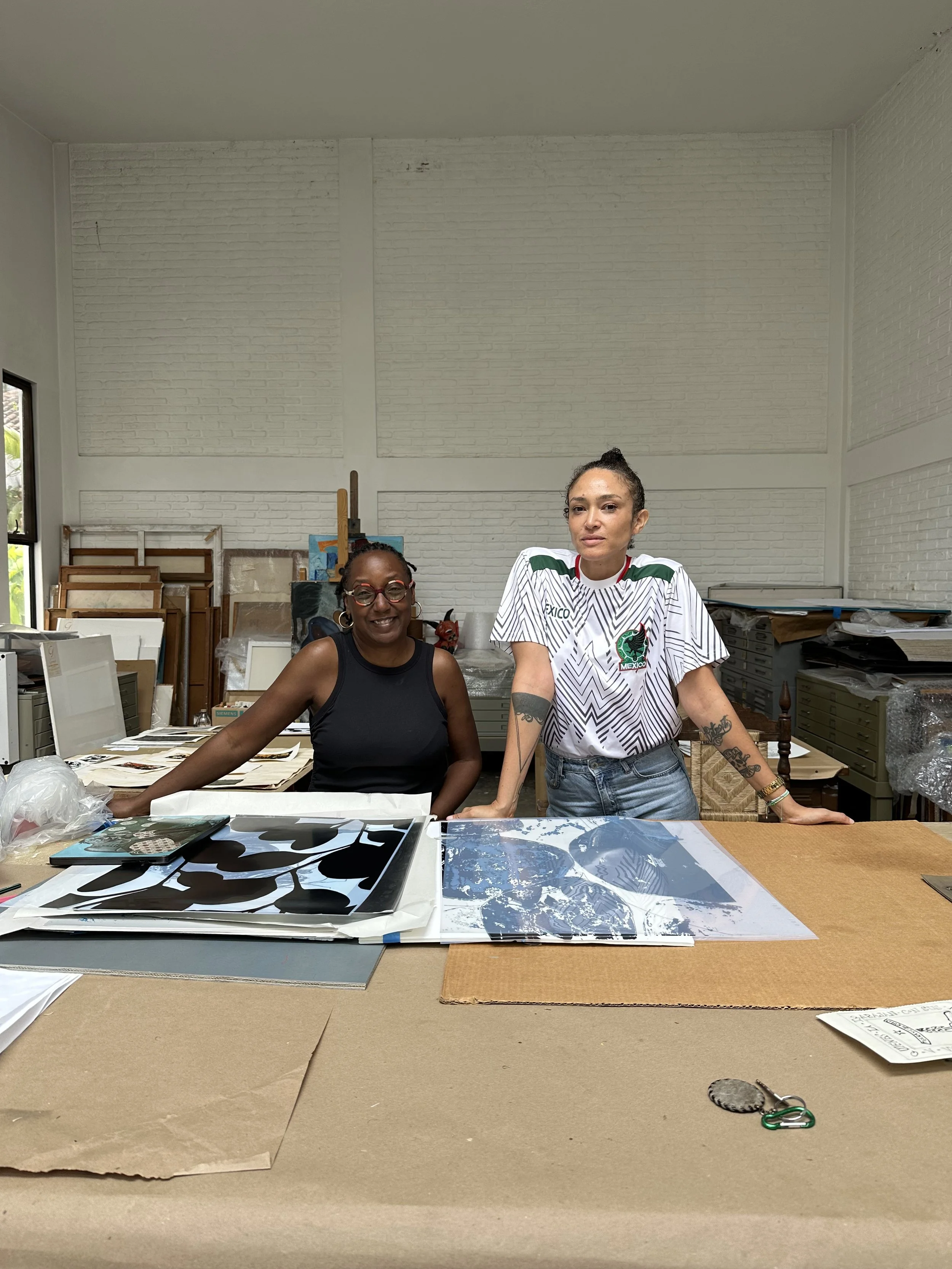
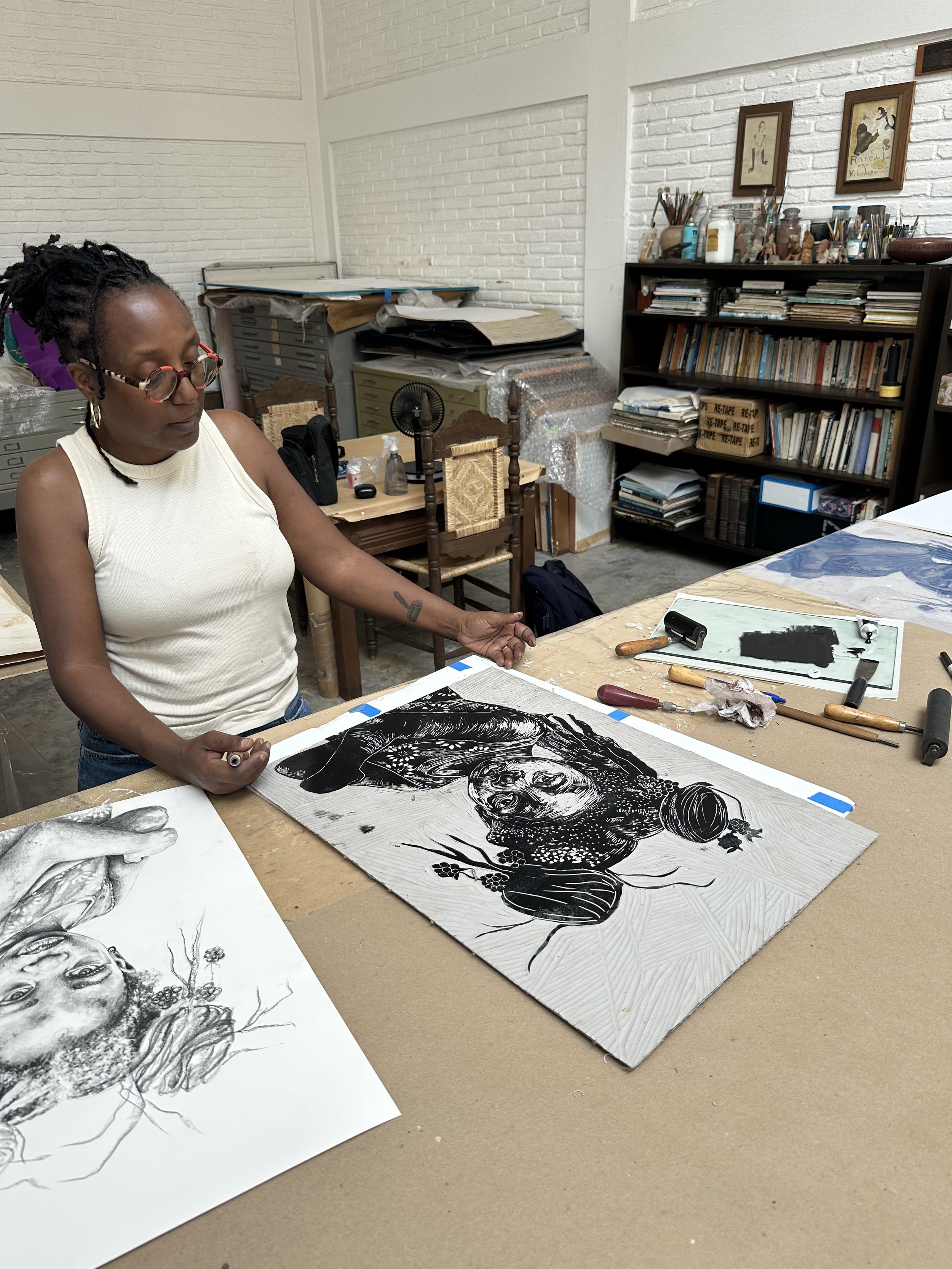
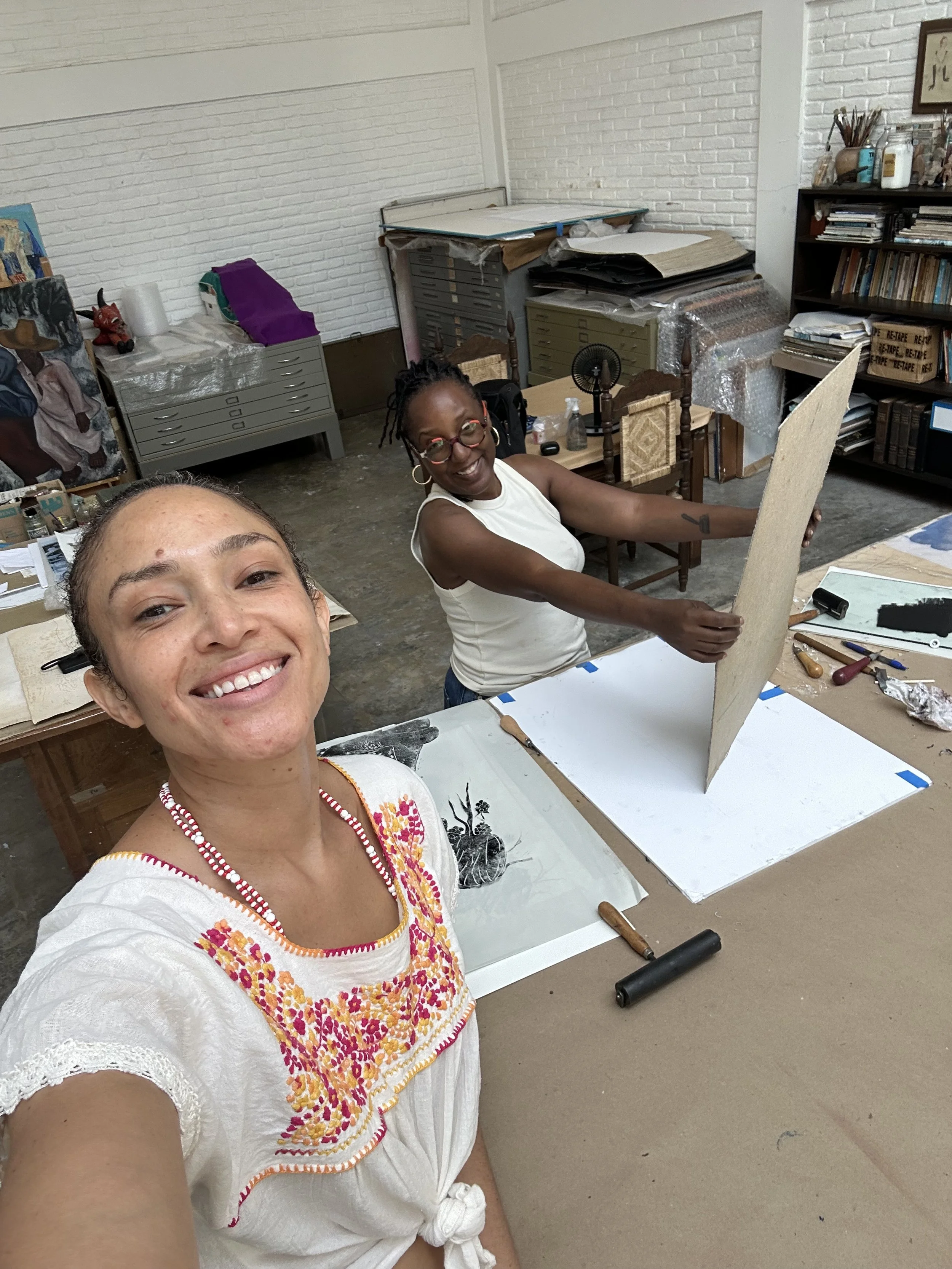
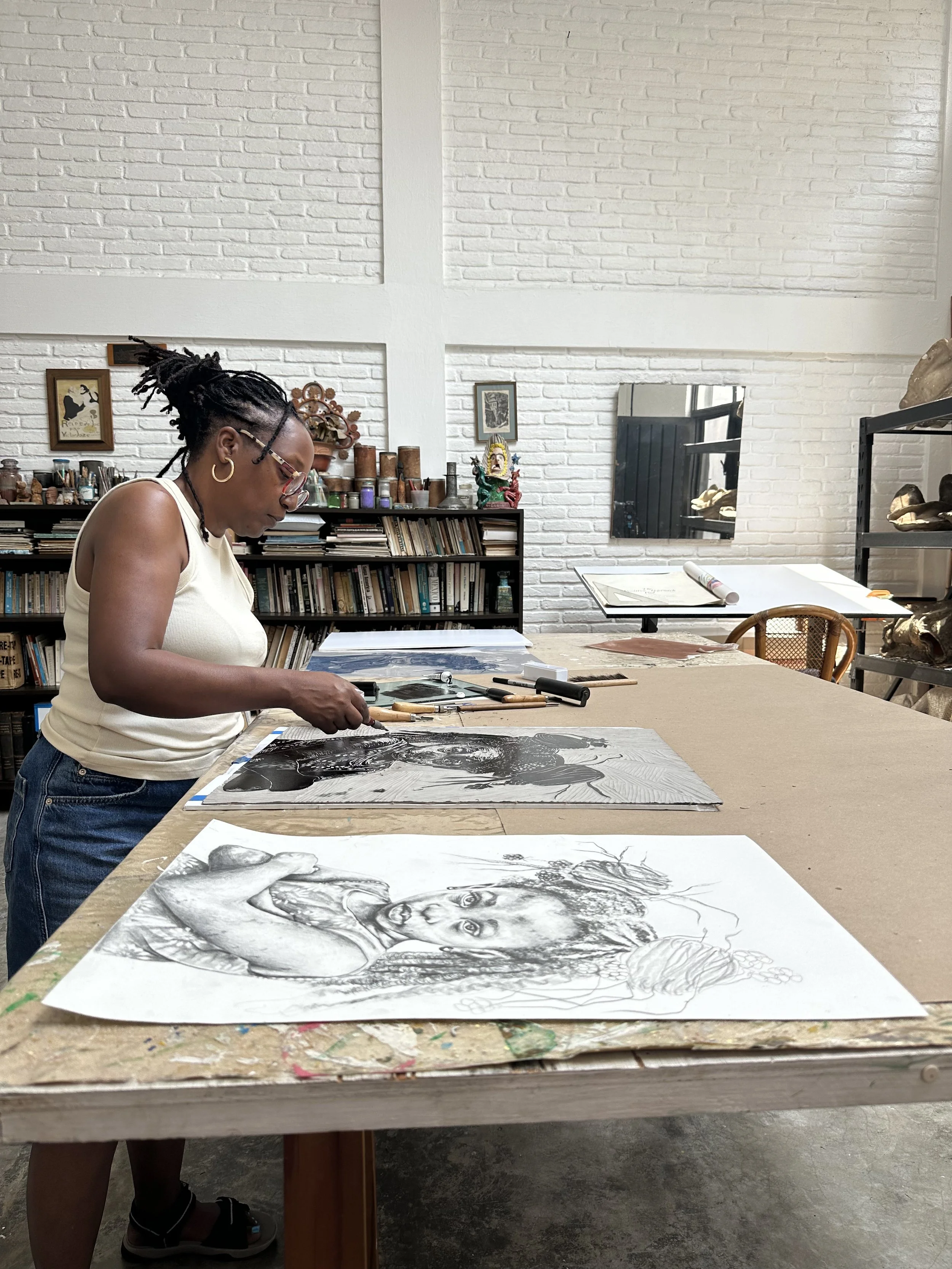
I'm surrounded by all these beautiful Black women who are just brilliant and champions of Elizabeth and champions of me. Kelly [one of the film's producers] suggested we reach out to Delita. She said she's really vocal about being influenced by your grandmother. So we reached out and Delita was the one who suggested it — she said, I would love to help, how about I make a limited edition print series? And then she asked about coming down to Catlett's Studio and doing it there. And I said, well, there's a printing press right here — because Delita is a lithographer, she's a printmaker too. She could come pull the edition on that press. And that's kind of how it came up, just very organically, with women supporting each other.
Sasha
And through another artist who is a student of hers — you're essentially owning a piece of her work in that way.
Naima
What I wanted people to know — in the film, as I've been learning more about the world of fine art and the way people acquire art, single pieces are valued much more because they're individual — you're the only person who can own it. But when Elizabeth started creating in this prolific way, she was kind of one of the first people to start doing this. Black people couldn't get into the public parks, let alone the museums. There was no opportunity for us to access fine art. And once that opportunity became available, there were no depictions of us in the accurate way of our dignity in those institutions. She went down to Mexico to learn how to printmake, so that she could mass produce artwork at an affordable price that Black people could purchase and put in their homes when they couldn't get into the museums. There are hundreds of prints of Catlett, and everyone's like, oh, well, it's not valued that much at market. And I'm like — that's so people could be able to purchase it. It was a very intentional reason, and it gets lost in the culture of acquiring fine art. But that's also symbolic of our history being erased.
And in a 360 way, Delita is like, how about we do something that is affordable for folks? So that people can experience this conversation through Elizabeth's student, in collaboration with her granddaughter — at a price that honors what Elizabeth originally stood for. […]
The limited edition print series is available for purchase here.
Sasha
What else are we really excited about with you and the film? Do we have any dates as yet? And anything else that you would like share? What did I not ask you that you wish I asked you?
Naima
Honestly, Sasha, you were there when I said I'm going to make a documentary about my grandma. We were at the cafes and I was writing and researching. One of my best friends, Melanie, who has been working in production for a while, she was like, Naima, documentaries take a long time and they're very hard. And I was envisioning that I would get this done in like a year. And it's been like 3 years.
[…] That was part of the plan too. Elizabeth's plan, God's plan of the universe. Like all the ancestors were like, honey, you have to go on this journey to do what it is you're capable of doing.
Had I just put something together real quick and released it, it would not have been in service of this goal that I have personally — to create beautiful things that inspire people. And then I was like, well, what does Elizabeth deserve? I got to really educate myself on how to make a film.
The thing that I'm most excited about right now is the fundraiser — I get to announce my production company while doing the fundraiser with Delita Martin. That's enormous. And the most thing I'm excited about is getting into the edit. Really getting into the edit of bringing her memoirs to life and the creative vision that I have — in a way where my voice can uplift her voice, giving both of us a voice at the same time. The self-exploration from where I started to this point in this journey — I feel like a completely different woman. And this is the woman that I've arrived at today that can produce the work that I wanted to be proud of.
To learn more about the film and support its production, visit Naima Mora Productions.To purchase the limited edition print series, visit Black Box Press Studio.
Naima would like to extend a special acknowledgment to the brilliant women who have championed this film and made it possible:
Co-Producers: Dr. Kheli Willetts, Melanie N. Clark, Kweighbaye KoteeConsultants: Rasheida Witter, Melanie Herzog Assistant Director: Abbigail Zoe Martinez
